
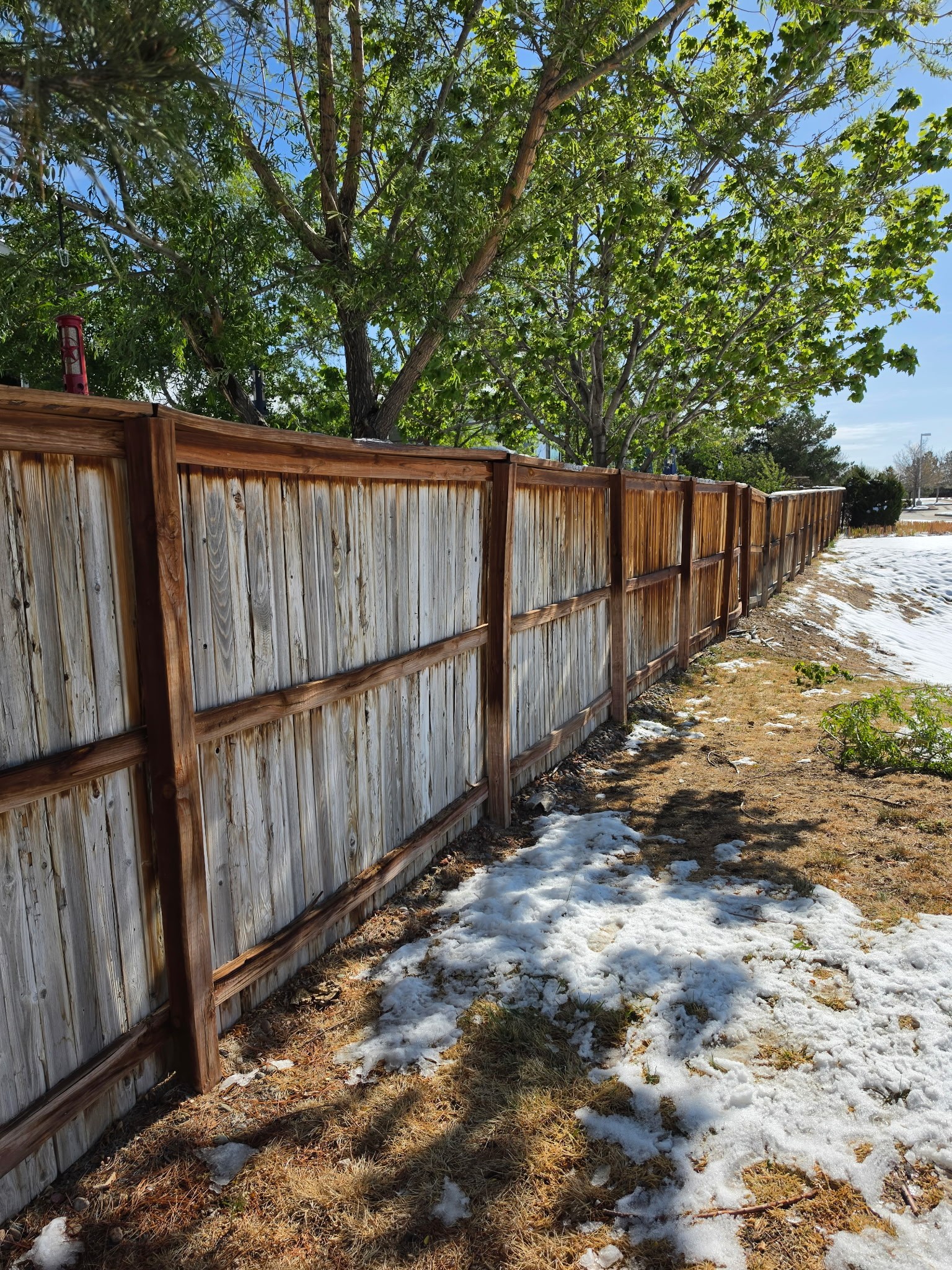
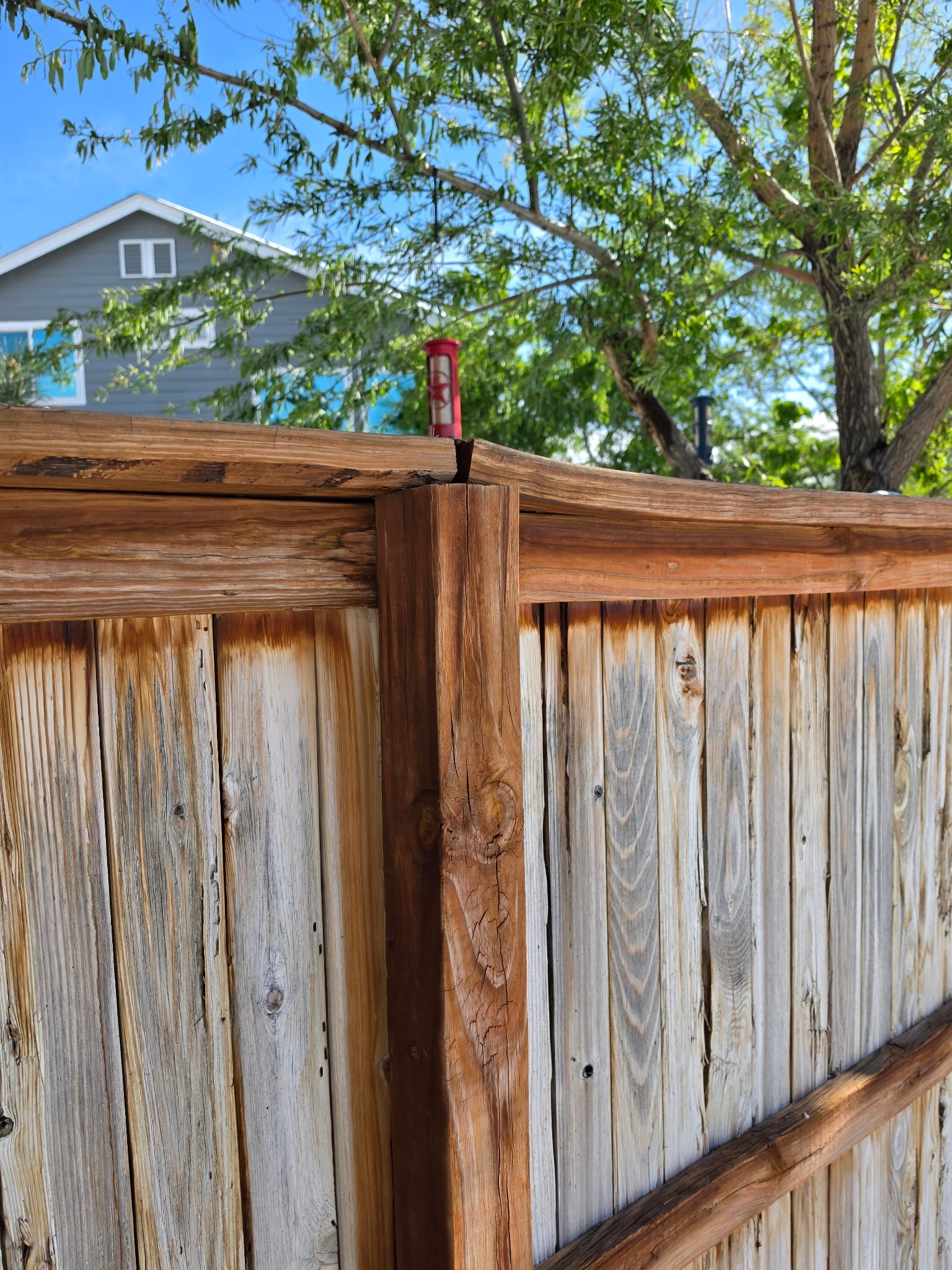
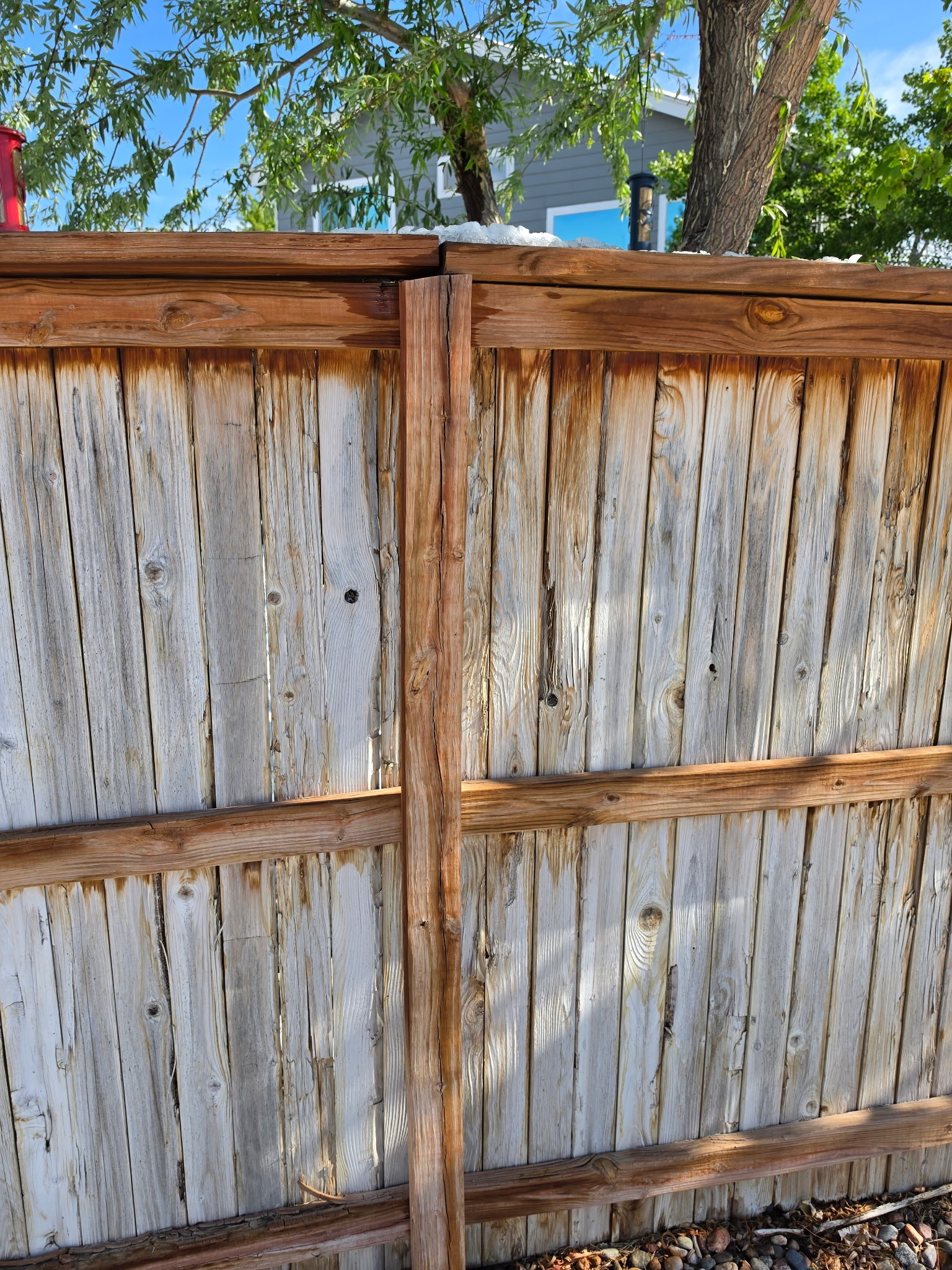
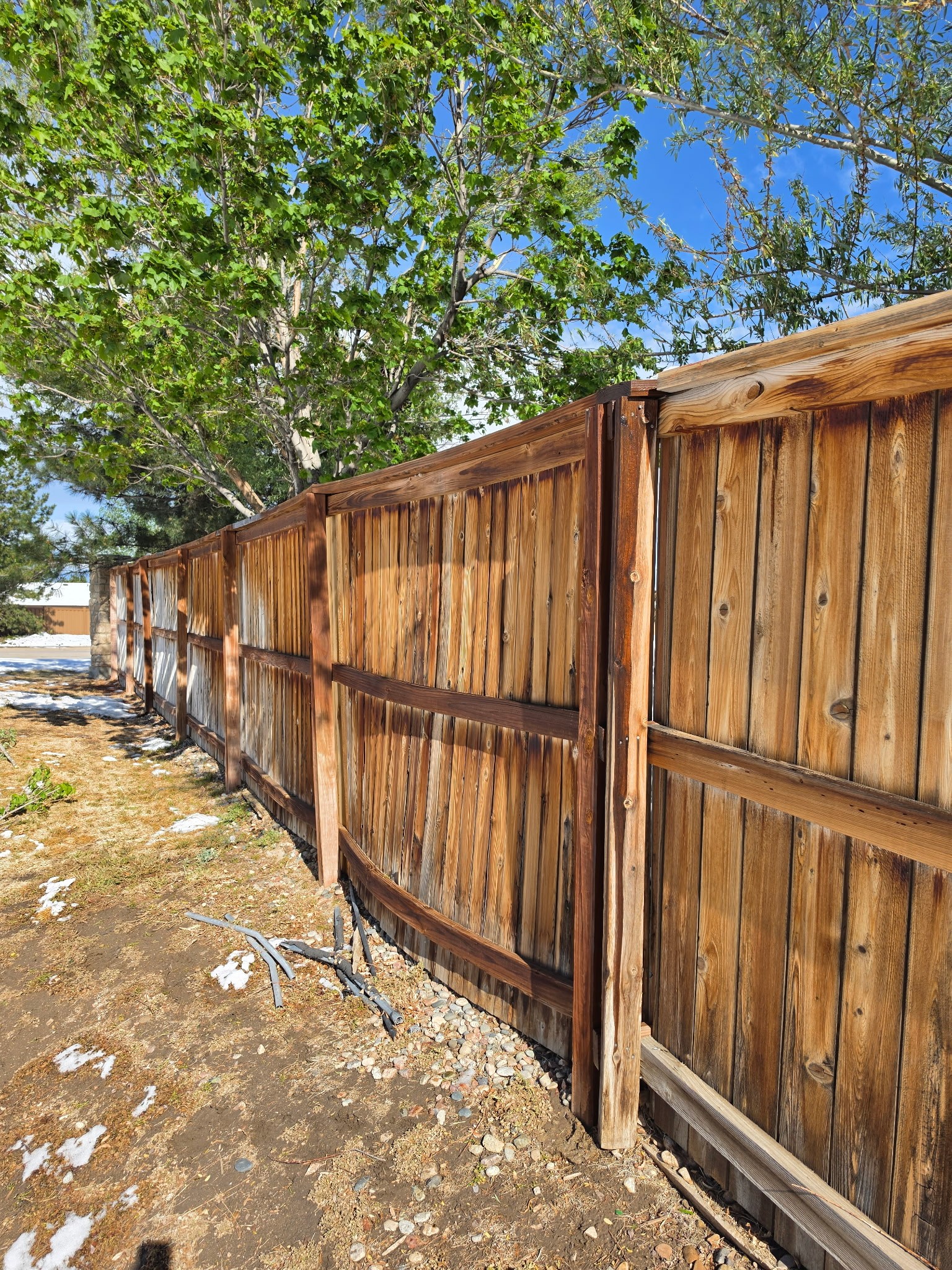
Redwood Fence with Top Cap and Fascia – Highlands Ranch, CO
As more fence companies begin offering redwood as an alternative to cedar, homeowners are asking an important question:
Is Redwood Actually a Better Fence Material for Colorado?
We sat down with Shawn Beard, a Colorado native and owner of Integrity Fencing, to talk through some of the claims being made about redwood fencing – and why, after building thousands of fences in Colorado, he still believes cedar is the better choice for most homeowners.
“Some suppliers say redwood performs just as well as cedar in dry climates. What’s your take?”
Shawn:
On paper, there are definitely similarities between the two woods. You can pull lab data showing comparable shrinkage numbers between redwood and western red cedar. But fences don’t live in a laboratory.
In Colorado, fence pickets are exposed to:
- intense UV,
- rapid moisture loss,
- freeze-thaw cycles,
- wind,
- and sun exposure on both sides.
That’s a very different environment than a controlled wood sample.
What I’ve seen is that fencing performance comes down to how the material behaves in the real world – not just what the technical data says.
In my experience, cedar tends to be more forgiving and more consistent over time in Colorado fencing applications.
“One challenge to your original article was the claim that redwood is more prone to cracking and splitting. Is that inaccurate?”
Shawn:
I’d phrase it differently today.
I wouldn’t say redwood is inherently defective or unstable. It’s a premium wood species. But there’s a difference between:
- a clear, high-grade wood sample,
- and the actual material commonly used in residential fencing.
Most fence boards today – whether cedar or redwood – aren’t perfect clear-heart lumber. They’re exposed pickets installed in a harsh climate.
In Colorado, all wood dries aggressively. But in my experience, redwood fencing tends to show surface checking, bowing, and cosmetic cracking more readily, especially once it’s fully weathered.
That’s not a scientific condemnation of redwood. It’s an observation from years of seeing fences age in this environment.
“Redwood suppliers point out that old-growth redwood heartwood is classified as ‘Very Resistant’ to decay, while western red cedar is only ‘Resistant.’ Does that matter?”
Shawn:
That’s technically true – but it leaves out an important detail.
The key phrase there is “old-growth redwood heartwood.”
That material is exceptional. The problem is:
- it’s expensive,
- increasingly scarce,
- and not what most residential fences are actually built with today.
Modern fencing materials often include varying amounts of sapwood, and sapwood – regardless of species – is much less decay resistant.
So for me, the real-world question isn’t:
“What’s the best theoretical version of redwood?”
It’s:
“What material is the homeowner actually getting on a typical residential project?”
And from a practical standpoint, I still trust high-quality cedar for Colorado fencing.
“Another criticism was your statement about staining. Suppliers argue that redwood accepts stain very well. What’s your response?”
Shawn:
Redwood absolutely can be stained successfully.
The issue is whether it’s as forgiving and predictable as cedar in real-world fence applications.
In theory, if:
- the boards are prepped perfectly,
- the stain is applied at the ideal time,
- and maintenance is consistent,
you can get beautiful results with redwood.
But most homeowners aren’t maintaining fences like fine furniture.
What I’ve seen is that redwood tends to show:
- more visible variation,
- less predictable color consistency,
- and more uneven weathering over time.
It can be challenging to match an HOA-approved semi-transparent stain color on redwood. The alternative is to use a solid body stain – if the HOA will allow it. Cedar usually gives a more uniform appearance, especially after years of exposure.
Again, that’s based on what I’ve personally seen on installed fences across Colorado – not just manufacturer literature.
“Suppliers also argue that redwood is actually stronger than cedar based on engineering properties.”
Shawn:
That’s true in certain measurements.
Redwood can show:
- higher stiffness,
- and higher bending strength
in laboratory testing.
But for fencing, those aren’t usually the deciding factors.
A fence isn’t a structural beam.
What homeowners care about is:
- how the fence looks after five or ten years,
- whether it twists or checks,
- how evenly it ages,
- and how much maintenance it requires.
From my perspective, long-term appearance and consistency matter more than small differences in engineering strength values.
“You also mentioned that redwood works better for decks than fences. Why?”
Shawn:
Decks and fences are very different applications.
Deck boards are:
- thicker,
- structurally supported,
- nailed down every 16 inches (fence rails can often have an 8 foot span)
- and usually maintained more aggressively.
Homeowners expect to:
- clean,
- seal,
- and refinish decks regularly.
Fences are different. Most people want a fence they can install and maintain minimally.
Fence pickets are also thinner and fully exposed on both sides all day long, which creates a different weathering cycle.
So while redwood can perform beautifully on a well-maintained deck, that doesn’t automatically make it the best fit for fencing in Colorado.
“Some people interpreted your original article as saying redwood is a ‘bad’ material. Is that what you meant?”
Shawn:
Not at all.
Redwood is a premium wood species with a long history and a lot of good qualities.
My point is simply this:
Choosing fence material should be about:
- the climate,
- the application,
- the expected maintenance level,
- and the quality of material actually being installed.
After building thousands of fences in Colorado, my opinion is that cedar remains the better overall choice for most residential fencing projects here.
That doesn’t mean redwood is worthless. It just means I believe cedar performs more consistently in this specific environment.
Final Thoughts from Shawn
I have yet to encounter a metro area HOA that allows redwood fencing. Ken-Caryl Master Association, for example, will not allow redwood fencing in their subdivisions. I think that speaks volumes.
There’s no perfect wood. Every material involves tradeoffs. But when we recommend cedar, it’s not because it’s trendy or easier to source. It’s because we’ve spent years seeing how these fences hold up in Colorado neighborhoods year after year.
At the end of the day, homeowners don’t live in a lumber lab. They live with the actual fence.